Brazil Sugar Market Review — February 2026
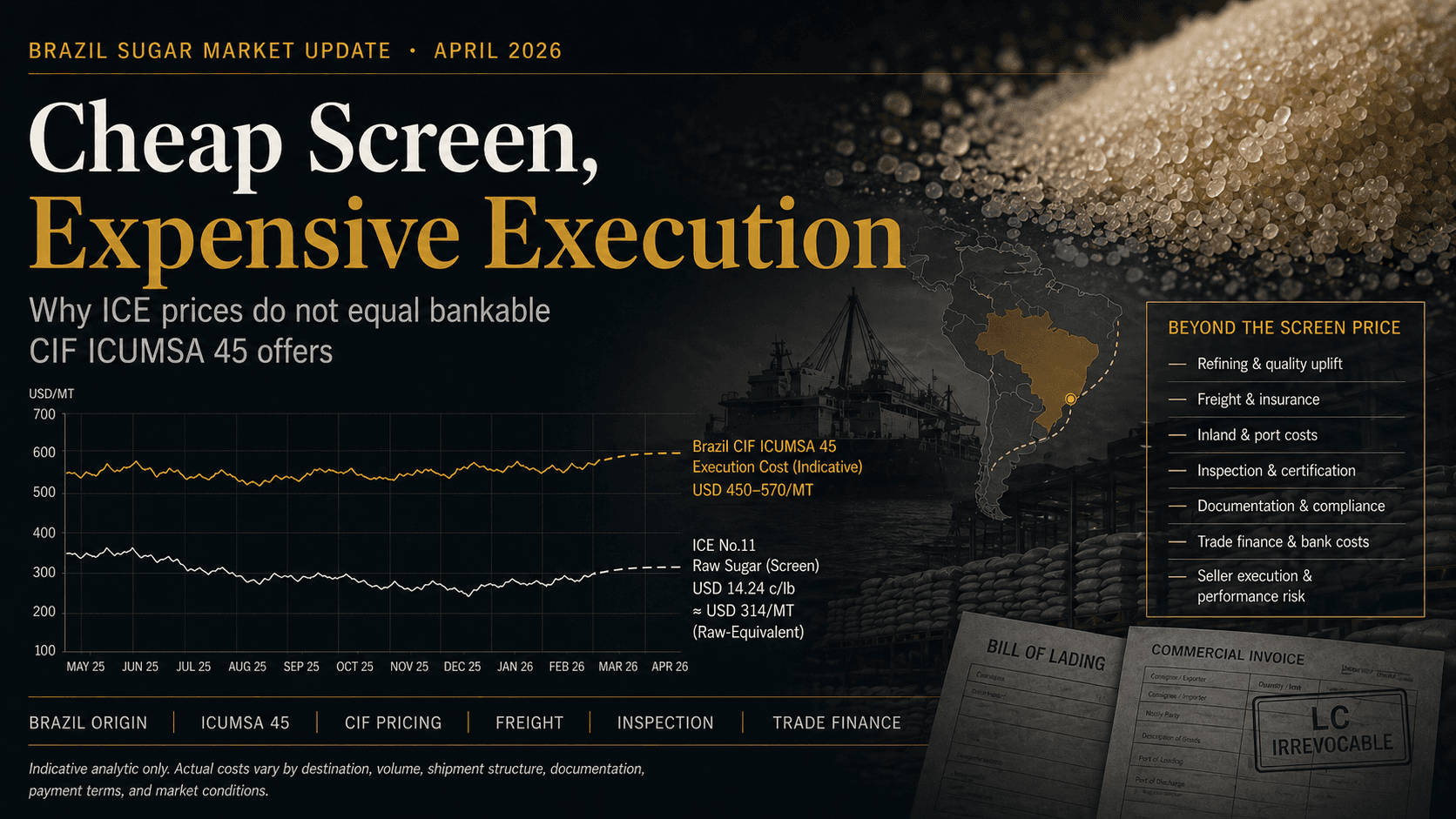
Brazil’s off-season exports surged 44% above year-ago levels while ICE No. 11 raw sugar futures fell toward 14 c/lb amid growing global surplus expectations.


Brazil’s off-season exports surged 44% above year-ago levels while ICE No. 11 raw sugar futures fell toward 14 c/lb amid growing global surplus expectations.

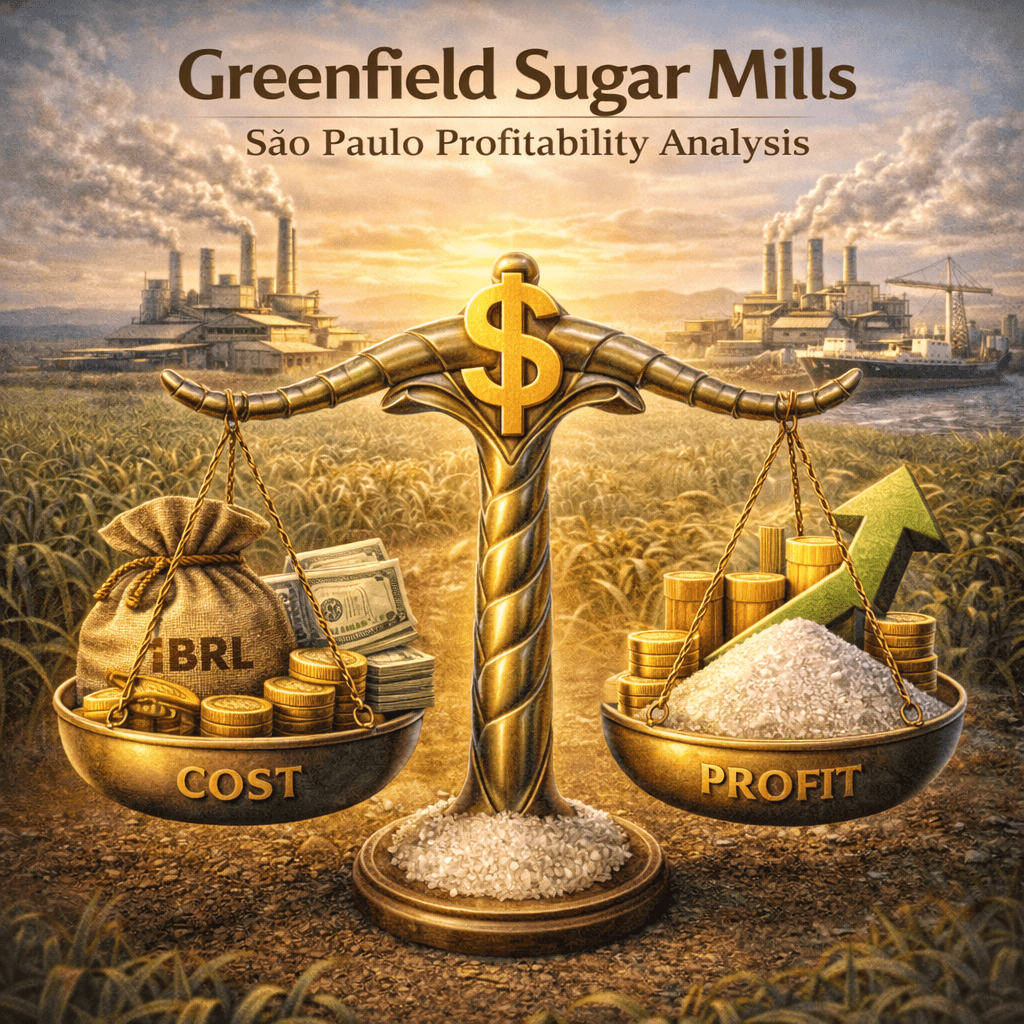
Greenfield sugar mills in São Paulo can work, but profitability is brutally sensitive to sugar price, ATR-linked cane cost, FX, and scale. At mid-cycle pricing, a 3M t/year mill can generate roughly R$150–R$200 EBITDA per ton of sugar FOB, while smaller mills hover near break-even and mega-mills win on unit costs and co-gen uplift.

A practical, step-by-step guide to building a greenfield sugar mill in São Paulo, from site selection and licensing to engineering, construction, staffing, and ramp-up. Includes realistic timelines, cost ranges, logistics considerations, and key risk controls.

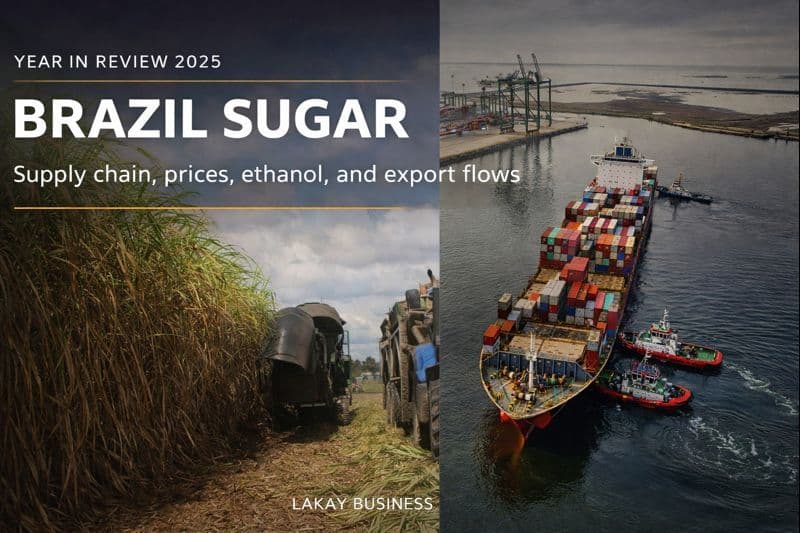
Brazil’s 2025 sugar story in one report: weather shocks, shifting sugar-ethanol incentives, production momentum, and export flows from cane fields to global ports.

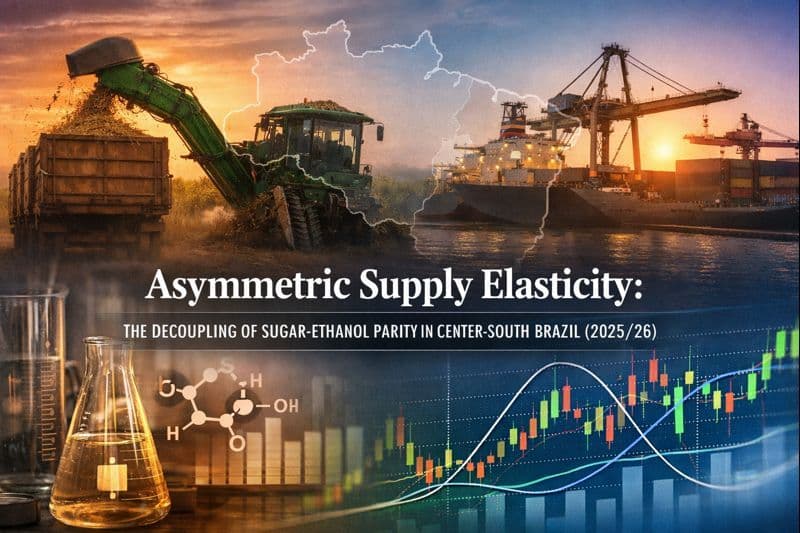
A record 52.1% sugar mix in Center-South Brazil persisted even as sugar–hydrous spreads compressed below the usual switching band. This research note details the decoupling mechanism and sets out measurable 2026/27 supply-risk triggers tied to rainfall and renovation pace.

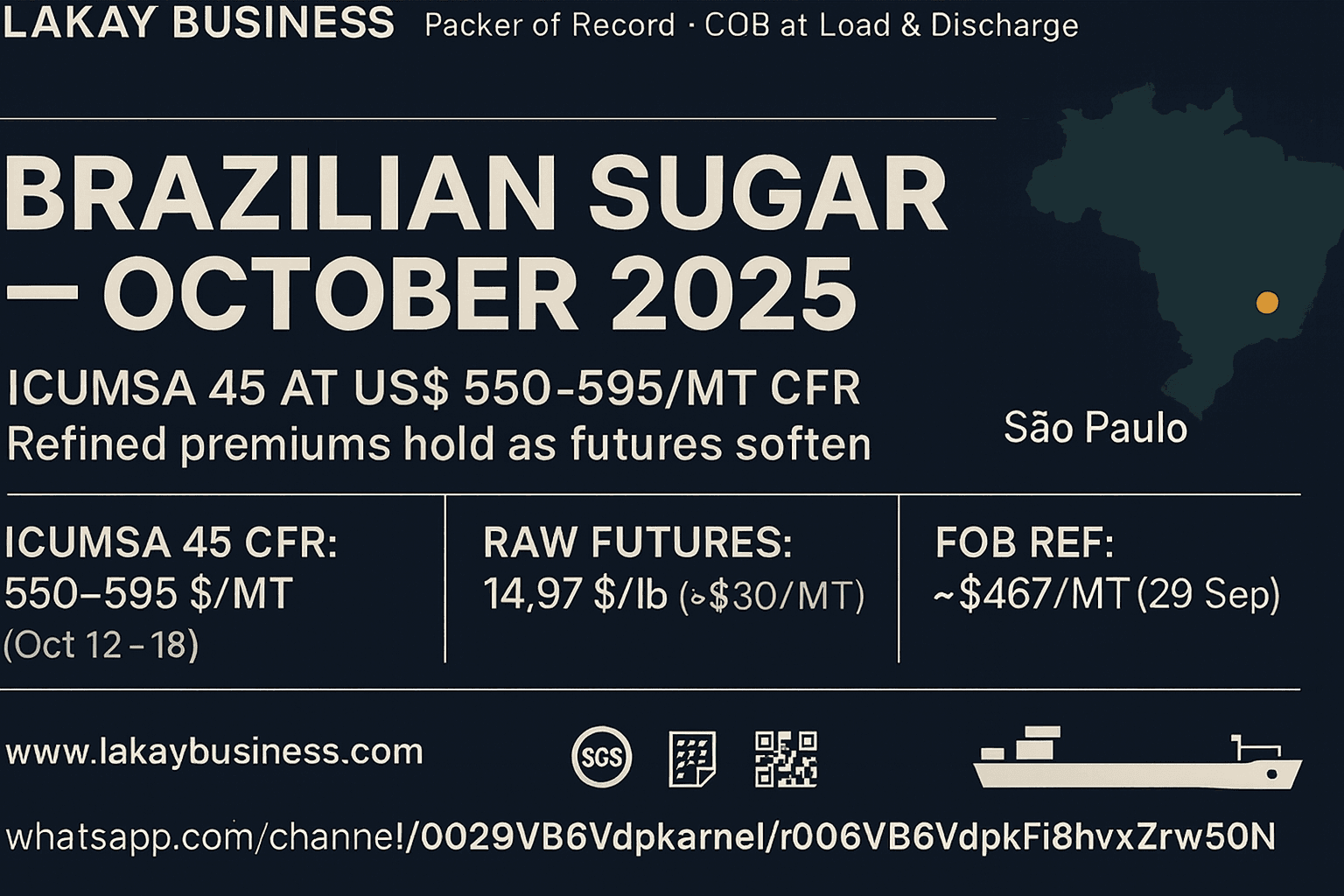
Refined Brazilian sugar (ICUMSA 45) is clearing at US$ 550–595/MT CFR while raw futures slide to 14.97¢/lb (~US$ 330/MT) and Brazil refined FOB sits near US$ 467/MT. Supply is ample, but buyers pay up for spec discipline, clean documentation, SGS at both ends, and traceability. Premiums look resilient into Q4; real risks are FX, freight, and export policy—not cane.

Brazil’s sugar juggernaut hit top gear in 2024: a record 38.24 million tons shipped for US$18.6 billion, supercharged by India’s export ban and a strong Brazilian crush. Flows were clear-cut—bulk raw sugar to Asia/Middle East, containerized refined to Africa. Indonesia (3.46 Mt) led buyers, followed by India (3.33 Mt, raw for refining), China (3.02 Mt), UAE (2.51 Mt), and Algeria (2.23 Mt, mainly refined). Logistics scaled smoothly: ~90% moved in bulk via Santos/Paranaguá, while containers (≈10% and rising) unlocked smaller, higher-value lanes. Monthly peaks smashed records—August and September each near 3.95 Mt—with Q3 throughput stabilizing global prices that might otherwise have spiked. Six big themes defined the year: unprecedented volumes, India’s absence, Africa’s pull for refined sugar, a container rebound, pronounced month-to-month swings, and striking port efficiency at extreme loads. Looking to 2025, exports likely ease as India tiptoes back, weather risk lingers, and ethanol parity tugs cane away from sugar—but the 2024 playbook (raw in bulk, refined in boxes, disciplined scheduling) gives Brazil a flexible base to stay in front.

Brazil’s July–August 2025 sugar market was a study in split screens: a global surplus story versus a Brazil-centric squeeze. Conab’s downgrades and decade-low TRS forced Center-South mills to slam the sugar mix higher just to tread water—industrial sprinting to offset weak cane. Exports stayed heavy, but the soy flood turned Santos into a choke point, with wait times, demurrage, and “hidden” costs blowing out FOB economics. Futures found a floor in rising domestic ethanol (the sugar/ethanol parity backstop), yet rallies were capped by the specter of India’s rebound and a possible export valve. China bought hard; spot CIF premia widened, reflecting logistics more than fundamentals. The read-through is practical: this market is pricing near-term Brazil risk, not distant balance sheets. If you’re buying, pay for certainty—CIF and alternate ports beat cheap-on-paper FOB when berths jam. If you’re selling, keep the mix flexible, hedge forward into 2026, and let ethanol parity do its job. Direction hinges on whether mills can keep outrunning weak cane quality faster than ports can clear the queue—and on how much India actually ships.

Brazil is a sugar powerhouse. It ships three main grades: ICUMSA 45 (white refined for direct use), VHP (high-polarization raw for refineries), and raw sugar with more molasses for industrial or further refining. In June 2024, prices swung on weather-hit yields, global demand shifts, and policy moves. LAKAY BUSINESS cuts through the noise—real-time market read, vetted mill partners, tight specs and quality control, hard-nosed negotiation, and end-to-end logistics—so buyers get bankable contracts and competitive terms without the broker theater.

Brazil’s sugarcane engine is still the world’s workhorse. After a record 705 MMT in 2023/24, the 2024/25 crop is tracking near 645 MMT on early-season dryness. The Center–South—especially São Paulo—delivers roughly 24% higher yields than the North–Northeast, driving faster rebounds when rains cooperate. Exports dominated 2023/24 at 35–38 MMT (China, India, Indonesia leading), but port queues turned logistics into the choke point. Domestically, consumption sits near 9.5 MMT; prices spiked in 2024 then eased—São Paulo crystal ended Feb-2025 ~R$139/50-kg. Mills flex between sugar and ethanol: 2023/24 output was about 45.5 MMT sugar and 35.3 bn L ethanol, with corn ethanol adding a few billion liters. Near term, strong global prices keep the mix sugar-biased; key risks are climate, labor/skills, and port capacity. Feb-2025 spot guide: raw ~$540/t (~24¢/lb); refined ~$600/t (white premium ≈ $60/t).